


Grèbe castagneux
Grèbe castagneux
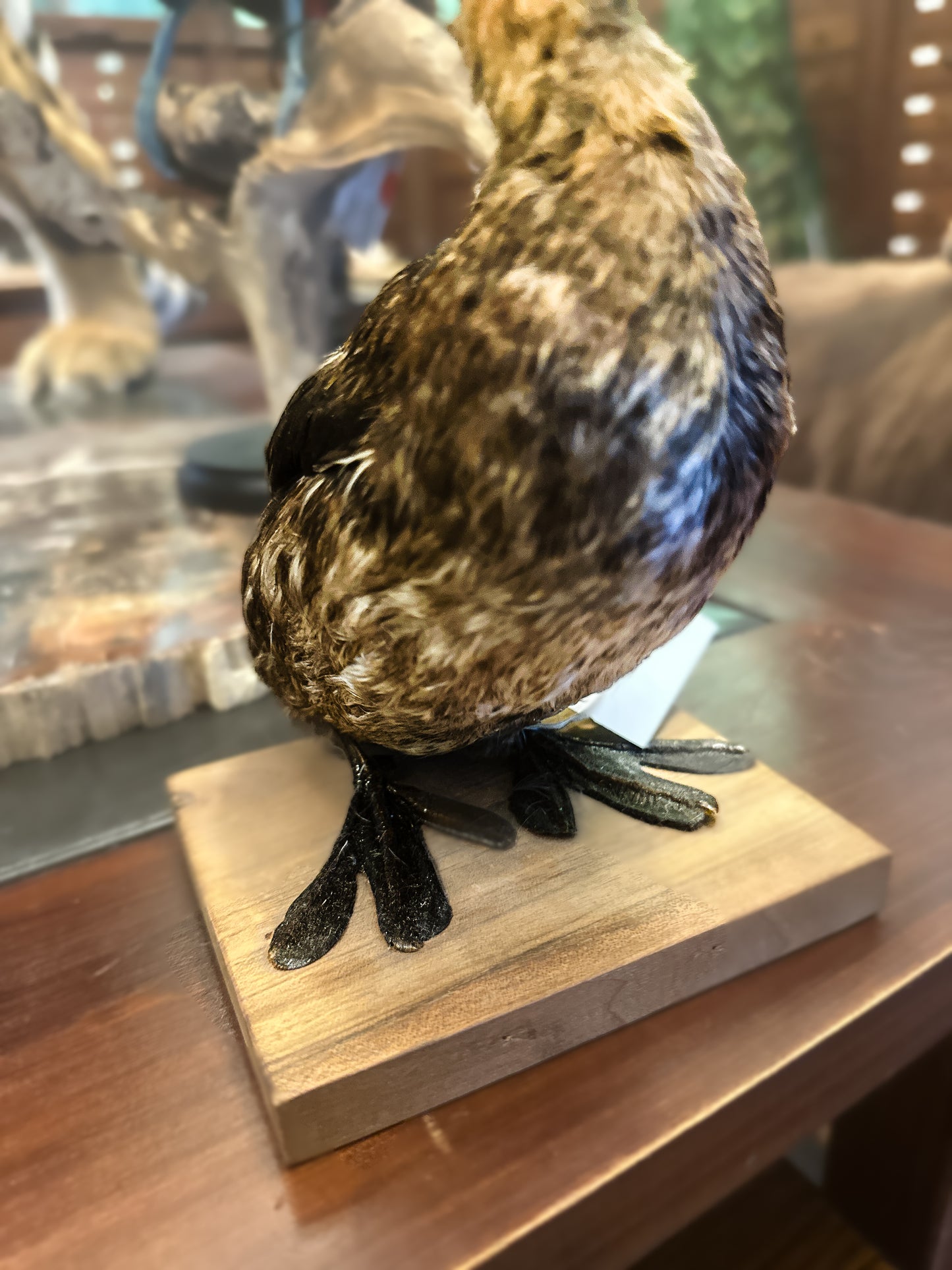
Le Grèbe castagneux (Tachybaptus ruficollis) est le plus petit des grèbes européens. Reconstitué selon le savoir-faire historique de Deyrolle, chaque spécimen est façonné pour capturer la posture vive de l'oiseau, mettant en valeur son plumage imperméable, son cou roux et la fine tache jaune à la base du bec.
Lorsqu'il se sent menacé, Tachybaptus ruficollis s'immerge doucement jusqu'à ne laisser dépasser que son bec et ses yeux, se fondant parfaitement parmi la végétation aquatique. Pour protéger leur estomac des arêtes de poisson, les adultes ingèrent leurs propres plumes et en nourrissent aussi leurs poussins.


Expertise
Taxidermy
It is the art and science of preparing, preserving and mounting animals to present them in a realistic and aesthetic manner. Taxidermy is used to create stuffed specimens for museums, exhibitions, private collections or educational purposes. It requires in-depth knowledge of animal anatomy.
Expertise
Repair and restoration
When stuffed animals suffer damage such as tears, discoloration or deformation, taxidermists intervene to return them to their original condition. The goal is to restore the appearance and integrity of the specimen ensuring that it maintains its realism and durability.
Expertise
Collection
A taxidermy collection refers to a collection of stuffed animals that are collected and preserved for exhibition, study or research purposes. It can be used educationally by observers and for study or research by scientists.
expertise
Maintenance advice
The parts that leave our workshops are treated internally and externally against parasites, but this last treatment can fade over time.
Here are some maintenance tips: For feathered animals: Every six months, lightly wipe a cloth impregnated with essence C (organic solvent) using
protecting the skin with gloves.
For furry animals: Every six months, remove the dust with a hair dryer at low intensity and in the cold setting, and pass over the hair a cloth impregnated with essence C (organic solvent), protecting the skin with gloves.